
2026-08-31 · William Brown
Water Extraction After Monsoon Storms in Peoria Arizona
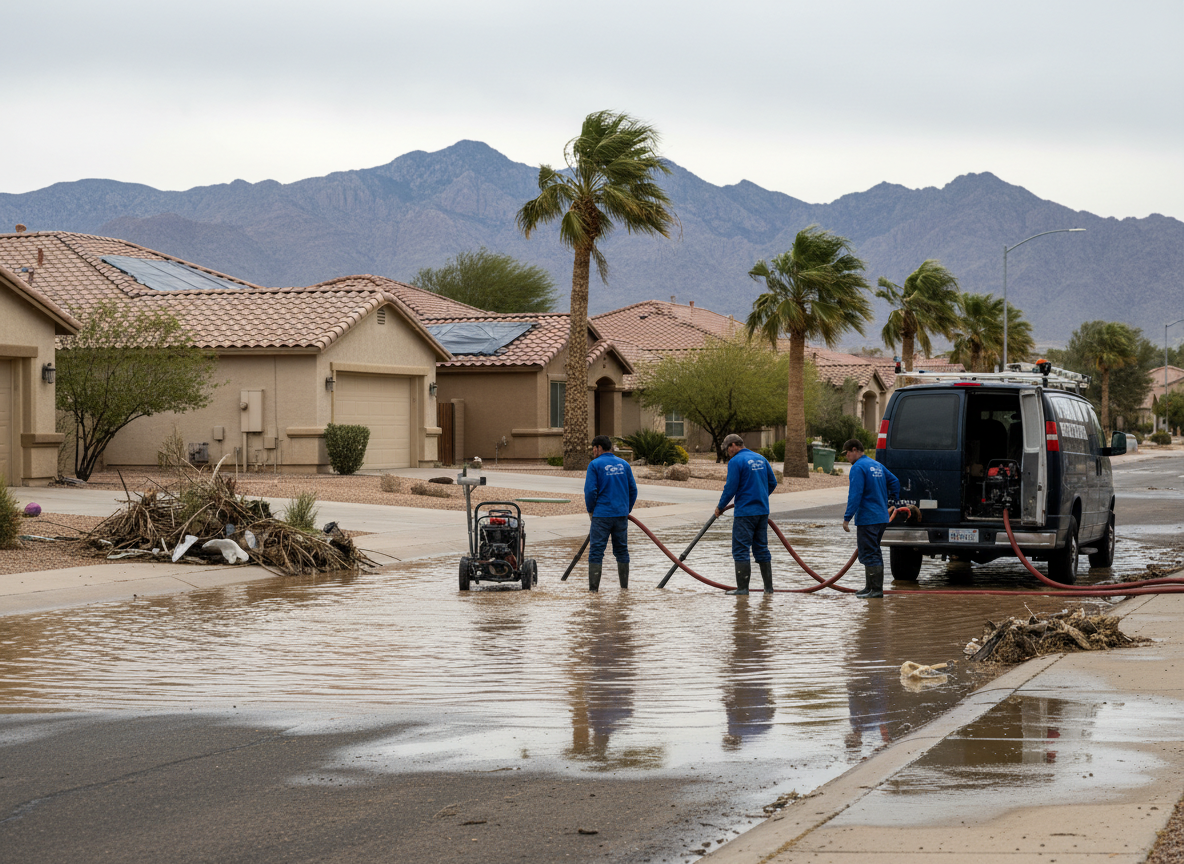
Water extraction after monsoon storms in Peoria Arizona typically takes 3–5 days for initial removal and drying when crews reach the property within hours of the call, though full structural drying can extend to 7–10 days in older homes with concrete slabs common across Old Town Peoria.
Monsoon Patterns and Local Terrain Challenges
Peoria sits in Maricopa County where monsoon storms deliver 1–3 inches of rain in short bursts between July and September, overwhelming drainage around Lake Pleasant Regional Park and low-lying sections of Vistancia. These events push water into homes built on expansive desert soil that shifts and cracks foundations over time. Crews often find water trapped under slabs in neighborhoods near the Peoria Sports Complex because the flat terrain slows runoff toward Rio Vista Park. Hot desert summers push temperatures above 110°F, which accelerates evaporation but leaves hidden moisture in wall cavities if extraction skips dehumidification. Mild winters do little to dry out prior damage, so properties that miss proper water extraction after monsoon storms in Peoria Arizona face repeated issues the next season.
Equipment and Steps for Effective Extraction
Technicians start with moisture meters and infrared cameras to map water migration through carpet pads and drywall in homes near Glendale and Surprise borders. High-volume pumps remove bulk water from garages and basements, followed by air movers and dehumidifiers sized for 1,500–3,000 square foot footprints typical in Vistancia developments. Water Extraction & Removal crews extract at rates of 50–100 gallons per hour from saturated slabs before switching to drying protocols. Water Extraction & Removal teams document every step with photos for insurance adjusters handling Maricopa County claims. Properties near Lake Pleasant often require extra time because sediment from storm runoff clogs extraction lines.
Risks in Older Housing Stock Around Old Town Peoria
Many homes in Old Town Peoria date to the 1970s and 1980s with original plumbing and flat roofs that fail during heavy monsoon downpours. Water migrates along stucco walls and pools in crawl spaces, raising humidity levels that promote mold within 48 hours. Extraction here demands careful removal of baseboards without disturbing lead paint or asbestos common in that era. Crews working near Rio Vista Park frequently encounter irrigation lines that burst after soil expansion, adding another water source that must be isolated before drying begins. Skipping these steps leaves salts from evaporated monsoon water that damage flooring adhesives.
Follow-Up Drying and Long-Term Prevention
After bulk extraction, crews monitor relative humidity daily until readings drop below 50 percent in affected rooms. Preventing Secondary Damage After Water Extraction in Peoria explains how to spot lingering moisture in subfloors. Homeowners in Lake Pleasant areas benefit from checking attic insulation for trapped water that later drips during mild winter nights. Drying Out Carpet After Water Intrusion in Peoria Homes covers pad replacement timelines that prevent odors in high-traffic family rooms. Properties near the Peoria Sports Complex see faster drying when windows face prevailing winds, but shaded north sides near Vistancia often need additional heaters.
When to Call Local Experts
Residents should contact Peoria Restoration Experts at 7380 W Olive Ave, Peoria, AZ 85345 during Mon–Fri 8am–6pm or Sat 9am–2pm whenever standing water exceeds one inch after a storm. Early intervention limits damage to electrical outlets and HVAC systems common in desert construction. Flood Damage Cleanup protocols apply when runoff from Lake Pleasant Regional Park enters yards. Storm Water Damage Restoration teams coordinate with Maricopa County flood maps to prioritize streets that historically flood near Surprise.