
2026-08-31 · William Brown
Preventing Secondary Damage After Water Extraction in Peoria
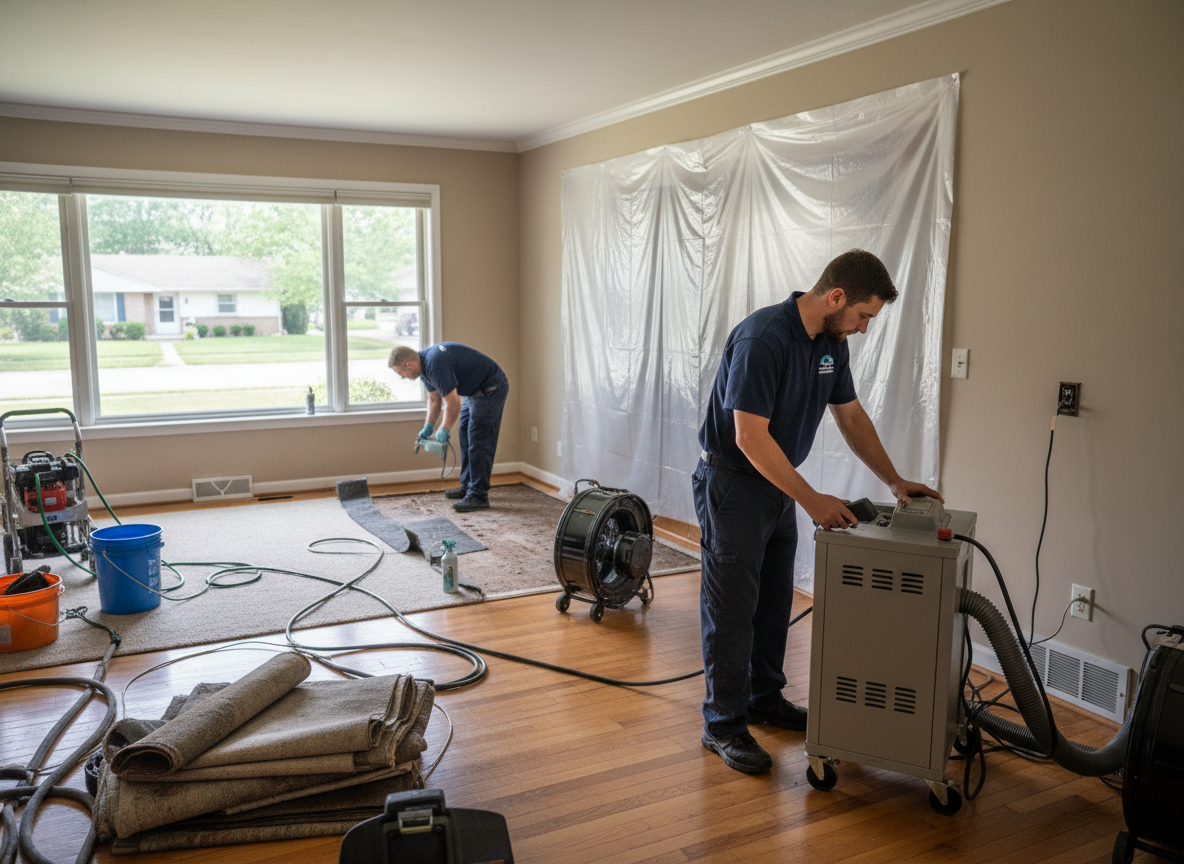
Secondary damage after water extraction in Peoria can be prevented by completing thorough drying and dehumidification within 24 to 48 hours while targeting moisture levels below 15 percent in affected materials. This timeline holds because the hot desert climate speeds surface evaporation yet leaves hidden pockets in walls and under floors that foster mold if ignored. Homes in Old Town Peoria often feature older plaster and wood framing that absorb water differently than newer builds in Vistancia, requiring targeted checks rather than uniform drying times.
Monitoring Moisture Levels in Walls and Subfloors
After extraction crews finish at properties near Lake Pleasant Regional Park, technicians must use moisture meters on drywall and concrete slabs every four hours for the first day. In Maricopa County homes, slab leaks common in older neighborhoods allow water to migrate under tile, so readings above 20 percent signal the need for additional air movers placed at floor level. Vistancia residences with tile-over-concrete floors retain subsurface dampness longer during mild winters, when outdoor humidity spikes can slow natural drying. Crews track these levels with infrared cameras to locate pockets behind cabinets or in crawl spaces that standard fans miss. Consistent logging prevents callbacks when owners notice musty odors weeks later.
Controlling Humidity During Desert Drying Cycles
Peoria's very hot summers create rapid top-layer drying that can mask deeper saturation in insulation and baseboards, so dehumidifiers must run until indoor relative humidity stays under 50 percent. Properties around Rio Vista Park often have larger open floor plans that allow better airflow, yet closed bedrooms in Surprise-adjacent homes trap moisture against shared walls. Technicians adjust equipment placement based on the home's age and construction, using 40- to 70-pint units sized to the square footage rather than running oversized machines that short-cycle. This approach keeps energy use reasonable while stopping condensation on cooler surfaces during overnight temperature drops.
Checking for Mold Risks Specific to Local Housing Stock
Mold colonies can begin forming in 24 to 72 hours when cellulose materials stay damp, especially in Old Town Peoria homes with original lath-and-plaster walls that hold water longer than modern drywall. After extraction, crews inspect attics and under sinks where leaks from water heaters often travel unseen along joists. Residents in Lake Pleasant area homes benefit from checking HVAC returns, since desert dust combined with residual moisture creates ideal growth conditions inside ducts. Linking to professional follow-up through mold damage remediation after water damage ensures any colonies are addressed before they affect indoor air quality.
When to Schedule Follow-Up Inspections
A final walkthrough 72 hours after extraction confirms all readings have stabilized, particularly in flood-prone zones near the Peoria Sports Complex where stormwater can re-enter through grading issues. Homeowners should request written moisture logs that include readings from multiple rooms rather than averages. For carpeted areas, additional guidance appears in the article on drying out carpet after water intrusion in Peoria homes. If readings remain elevated, owners can review pricing details in the cost guide for water removal in Peoria homes before approving further equipment time. Peoria Restoration Experts operates from 7380 W Olive Ave, Peoria, AZ 85345 with hours Monday through Friday 8am to 6pm and Saturday 9am to 2pm for these inspections.