
2026-08-31 · William Brown
Handling Water Damage Near Lake Pleasant in Peoria
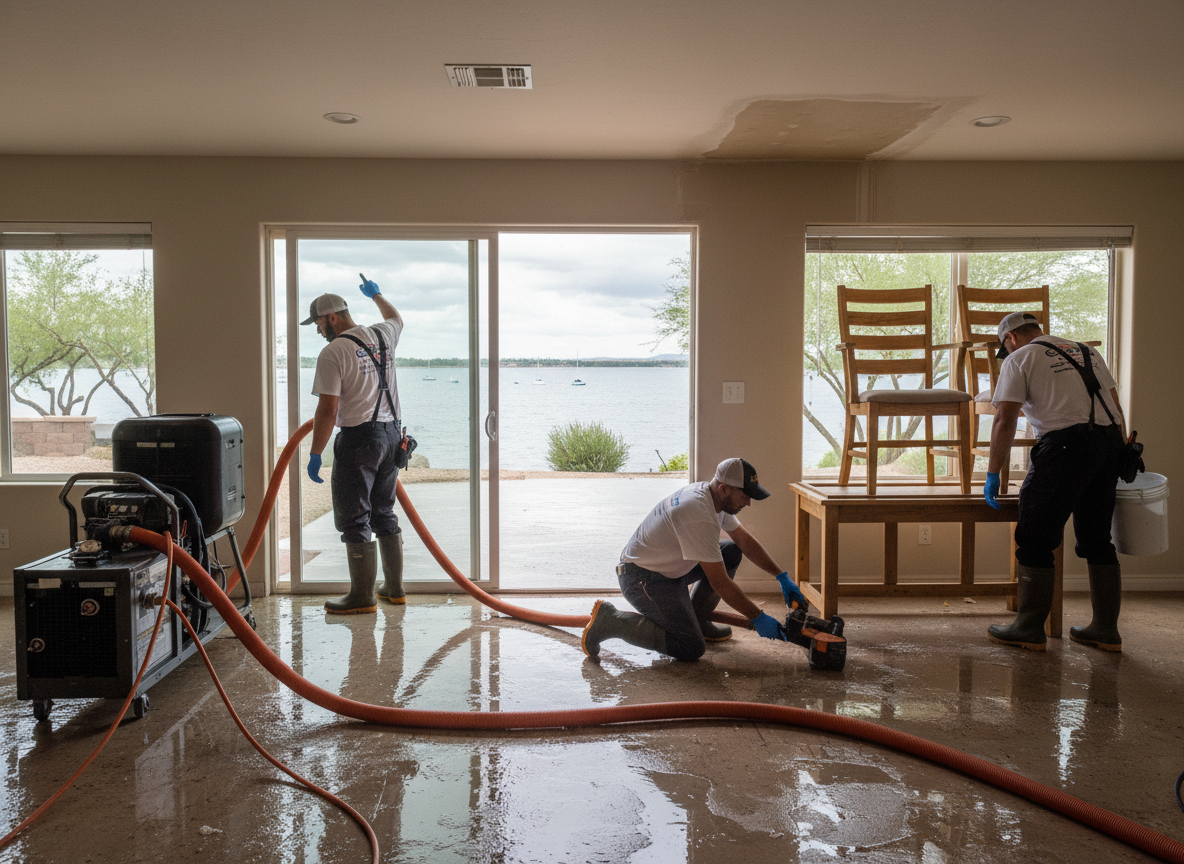
Water damage near Lake Pleasant in Peoria requires immediate water extraction within the first 24–48 hours to limit structural saturation in homes built on the area's clay-heavy soils. Properties in Vistancia and around Lake Pleasant Regional Park face higher risks from runoff during monsoon events, while older stock in Old Town Peoria often has slab foundations that trap moisture longer in the hot desert climate.
Local Water Intrusion Patterns Near Lake Pleasant
Lake Pleasant Regional Park and surrounding terrain direct seasonal stormwater toward residential zones in Vistancia and parts of Peoria. Mild winters reduce freeze-thaw cycles, yet intense summer heat accelerates mold growth once moisture is present. Homes in these neighborhoods typically feature stucco exteriors and attached garages that channel water toward foundations during heavy rains. Maricopa County soil conditions hold water longer than sandy desert ground, extending drying times for slab leaks or floodwater intrusion. Residents near Rio Vista Park report similar issues after park irrigation overflows reach adjacent streets.
Initial Assessment and Containment Steps
Begin by identifying the water source and stopping flow before extraction starts. Document visible damage with photos for insurance while avoiding electrical hazards in flooded areas. In Peoria's desert climate, standing water evaporates quickly on surfaces but remains trapped under flooring and in wall cavities. Use moisture meters to check subfloors in homes built before 2000, common in Old Town Peoria. Isolate affected zones with plastic sheeting to prevent spread to unaffected rooms in Vistancia properties.
Water Extraction & Removal Techniques
Professional water extraction & removal uses truck-mounted pumps and portable extractors rated for 10–15 gallons per minute on saturated carpets and pads. For floodwater near Lake Pleasant, remove all standing water first, then address hidden moisture in crawl spaces or under slabs. Follow with flood damage cleanup protocols that include antimicrobial treatment suited to the region's high temperatures. Homeowners in Surprise and Glendale often see faster results when extraction occurs before afternoon heat peaks.
Drying and Monitoring in Desert Conditions
After extraction, deploy air movers and dehumidifiers sized for the square footage, targeting 40–50% relative humidity indoors. Peoria's low humidity aids surface drying but can mask moisture deep in drywall or insulation. Check readings daily for 3–5 days on average, longer in Vistancia homes with thicker insulation. Preventing secondary damage after water extraction in Peoria outlines how to avoid warping in wood trim common to local builds.
When to Call for Professional Support
Contact a local team at 7380 W Olive Ave if water reaches more than 12 inches or affects electrical systems. Available Mon–Fri 8am–6pm and Sat 9am–2pm, crews familiar with Maricopa County permitting can coordinate with Lake Pleasant Regional Park authorities when runoff originates from public land. This approach keeps jobs grounded in the actual conditions of Peoria neighborhoods rather than generic methods.